
Joseph is a student from The Australian National University who chose to study in Bandung to gain a front-row seat to international relations from an Indonesian perspective. Through his Global Politics class, daily walks through local streets, and a memorable rainy evening at a warung, he came to see Indonesia’s complexity firsthand reinforcing his belief that understanding life on the ground is essential for anyone serious about future collaboration between Australia and its most important regional neighbour.
What made you decide to trade textbook international relations theory for a front-row seat experience in Indonesia?
I felt that a front row seat to how international relations would be taught in Indonesia would not only be more interesting in general, but of greater value as it could reveal different perspectives than ones, I was used to.
You’re studying complex regional and global issues right at the heart of ASEAN. Which class or topic has challenged or completely shifted your perspective on Indo-Pacific relations so far?
My class on Global Politics challenged my perspective on Indo-Pacific relations as it revealed to me the indifference to either option within the emerging America-China competition, as long as that competition remains competitive (as important neutral parties such as ASEAN stand to benefit from bi/multipolarity).
How has living in Indonesia changed the way you view everyday social issues on the ground?
Living in Indonesia transformed my understanding of social issues such as wealth inequality and inequitable access to education as lived realties, instead of sad but ultimately removed phenomena. Living in Indonesia has reinvigorated my perspective that such social ills require continuous communal effort and political advocacy to meaningfully address.
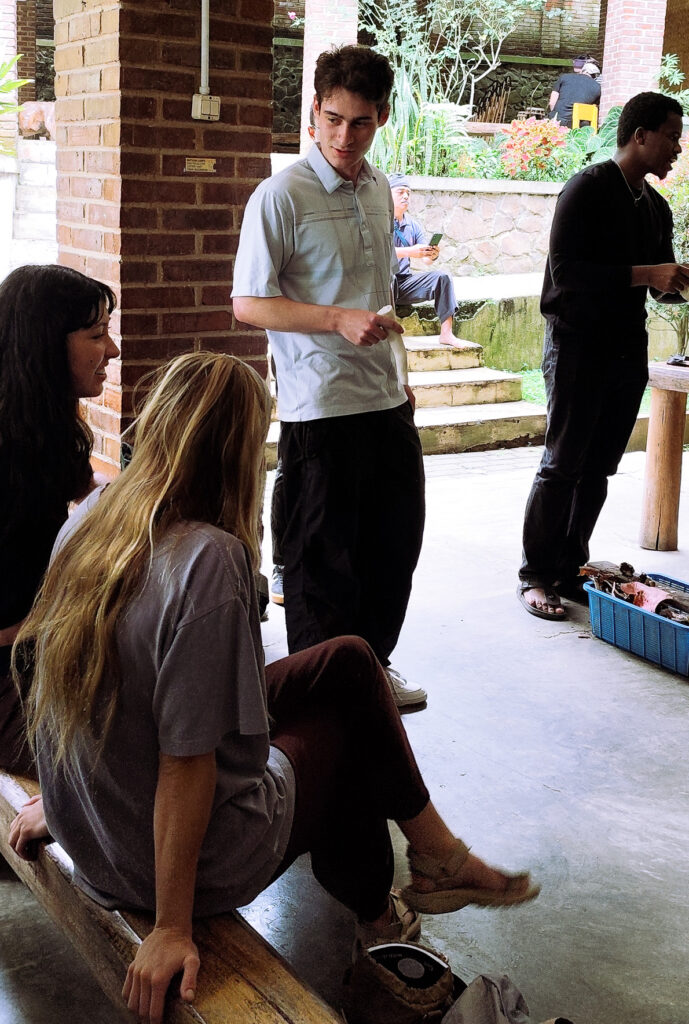
Many Australians grow up seeing Indonesia mainly as a holiday destination like Bali. How has living in Bandung reshaped your understanding of Australia’s relationship with its closest neighbour?
Australia and Indonesia are inseparable neighbours. Living in Bandung, Australia and Australians are well regarded peers, with desirable traits to emulate like our rule of law and ironclad democratic institutions whilst scoffed at regarding our multi-pronged approach to the energy transition. Trade between the two is vital for one another, and geo-politically our relationship is the most important of any middle-powers within the region.
How do you spend your free time connecting with the local community or exploring the city?
I would make it a priority to walk as much as possible to different places within my general vicinity. In doing so, I gained a clearer understanding of what life in Indonesia is like, both with local members of the community and the architecture of the city. Walking around meant there was more time to live in a space and truly build an understanding of how life is lived in that space. For example, I would often walk through some side streets on my shopping trip, and in repeating this route I not only gained an understanding of the local schedule of residents but got used to such an environment.
Did you have any doubts, anxieties, or misconceptions before making the move to Indonesia? How did you move past them once you arrived?
I had serious reservations about the logistics behind living abroad in a country without speaking the primary language, but thanks to the assistance of ACICIS I never had to worry about life administration in Indonesia.
What is one unexpected moment – a conversation, a travel story, or a local experience – that made you realize, “I’m so glad I chose to study here”?
On a whim one night, I was walking through the torrential rain’s characteristic of Bandung during the rainy season and sat down at a local warung I had never tried before. I ordered a boiling hot tea, some chicken and rice, and listened to the rain pelt the road as I sipped my tea. In that moment I felt that no matter what else happened, I had made the right decision.
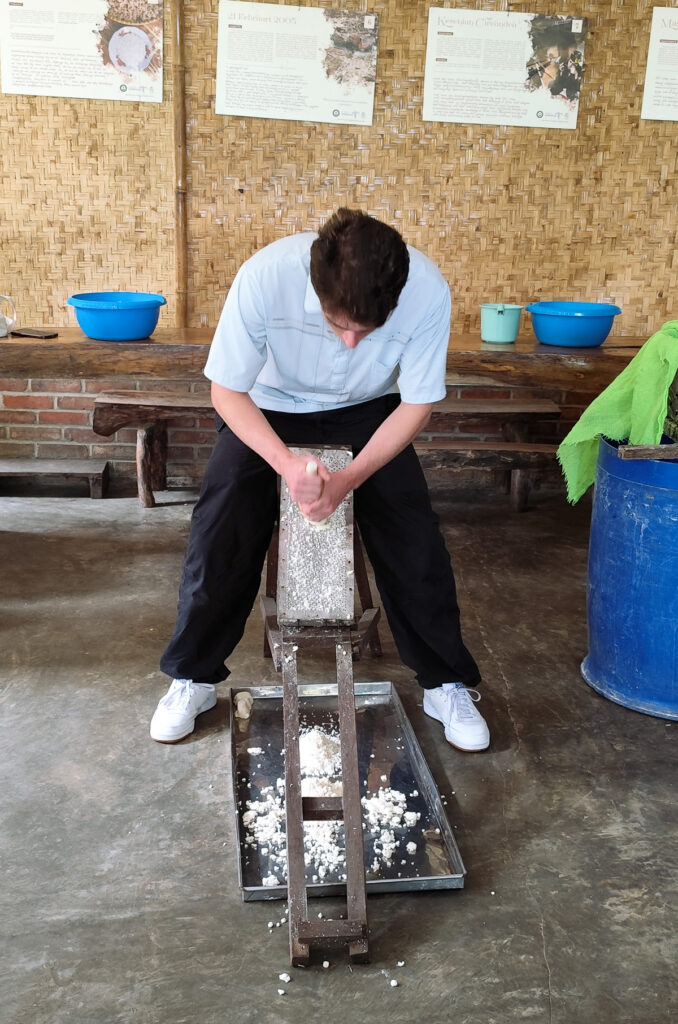
What’s your favourite Indonesian word or slang phrase you’ve picked up, and when do you find yourself using it?
‘Masuk akal’ was my favourite phrase to use because it was a natural sounding response which is easy to use and remember in most conversations, formal or informal.
For students thinking about a future in international policy, foreign service, or global affairs: why is firsthand experience in Indonesia an absolute game-changer?
Experiencing life in Indonesia firsthand will undoubtedly impart a sense of how ‘global’ or ‘international’ the extent of your studies is. People who you will never meet in a culture different to yours may have their lives changed by decisions you or your colleagues one day make, so understanding the differences in life within any country abroad is integral to future success. Additionally, it is paramount to understand life in Indonesia if you want to meaningfully engage with the country in the future, and studying abroad is the best way you can do so whilst maintaining your professional trajectory.
How do you hope to use the insights and networks you’ve built during your Acicis program to foster future collaboration between Australia and Indonesia in your career?
The network I was privileged to build thanks to the ACICIS program will help me in my future career because it will enable me to better collaborate with future Indonesian counterparts. Additionally, the life experience one gains from undertaking this program will undoubtedly make you a more openminded, tolerant, and worldly person, which in a future career with an international focus will be a feather in anyone’s cap.