
PERTH – Friday, July 31, 2026.
Acicis (the Australian Consortium for ‘In-Country’ Indonesian Studies) has warned that Deakin University’s decision to discontinue its language majors and diplomas is the first major test of whether Australia’s universities and governments will act on the parliamentary report handed down only weeks ago.
In June, the House of Representatives Standing Committee on Education tabled Security and Prosperity in Asia: Building Asia capability in Australia through the education system and beyond. The report’s 34 recommendations set out what the Committee described as a “minimum viable pipeline” for a sovereign capability now in crisis. The report’s recommendations are designed to stop—or at least slow down—course closures of the kind Deakin has just announced.
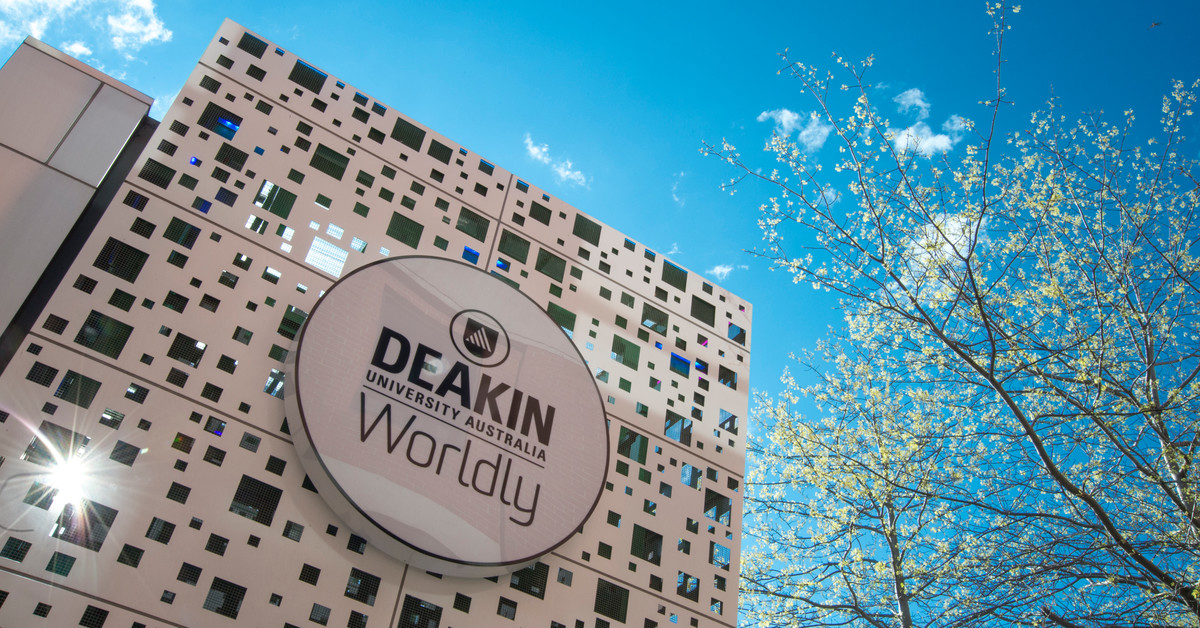
From 2027, Deakin students will no longer be able to complete a major or a Diploma of Languages in Indonesian, Mandarin Chinese, Arabic or Spanish. The four languages will be retained only as a four-unit minor, delivered online.
“The Committee was very clear in its report,” said Acicis Director, Liam Prince, “Asia capability is a vital sovereign capability that Australia’s education system—as currently configured—is failing to deliver,” Mr Prince stated. “Now, just six weeks after the release of the report, one of Australia’s largest universities has effectively announced the staged discontinuation of its Chinese and Indonesian language programs.”
Mr Prince explained that Australian universities respond to student demand signals and to a Commonwealth (CGS) funding system that incentivises course rationalisation over maintenance of niche, low-enrolment subjects—including languages.
“It’s not fair to blame Deakin University administrators alone for this latest course closure,” admitted Mr Prince said. “Rather, it’s the product of the collective failure of Australian governments—state and federal—over the past 30 years to invest in a pipeline of students studying Asian languages within Australia’s primary, secondary and tertiary education systems.” “This has given rise to the present situation in which closing a language program is the rational choice for every vice-chancellor and faculty dean in the country”, added Mr Prince. “The recent parliamentary report acknowledges this historical failure and maps in considerable detail the ‘complex systems problem’ that Australia now faces to rebuild its Asia capability infrastructure. Deakin’s decision has simply emphasised the severity of the crisis faster than anyone expected,” added Mr Prince.
The parliamentary report recommends that the new Australian Tertiary Education Commission (ATEC) name Asia capability in its first Statement of Strategic Priorities (Recommendation 19) and establish an Asia Capability Compact guaranteeing sustained national provision of priority Asian languages and area studies (Recommendation 20). The report also recommends reinstating protections for priority Asian languages in Commonwealth Grant Scheme agreements (Recommendation 21).
Mr Prince noted the timing. ATEC’s first Statement of Strategic Priorities is due by 1 January 2027, and mission-based compacts will be managed from 2027 — the same year Deakin’s course changes take effect.
“The mechanisms Parliament has designed to prevent these program closures come online in 2027. Deakin’s language majors disappear in 2027. If the sector spends the intervening months quietly cutting courses, ATEC will inherit an Australian higher education system with even less residual Asia capability infrastructure remaining than the already concerningly low level documented in the Committee’s report.”
The decision at Deakin compounds an already steep national decline. Domestic enrolments in Southeast Asian languages at Australian universities have fallen by more than 75 per cent since 2004, leaving roughly 500 domestic students studying Indonesian nationally as of 2024. In 1992, 22 Australian universities taught Indonesian; as of 2026 that number stands at 13, with as few as ten sustaining a full program. National Year 12 Indonesian enrolments fell from 1,161 in 2010 to 486 in 2024.
Acicis is calling on the Australian Government to respond to the report’s 34 recommendations without delay, on ATEC to name Asia capability in its inaugural Statement of Strategic Priorities, and on universities to hold off on further closures of Asian language programs until compact arrangements are settled.
“The acid test of the parliamentary inquiry report is whether the Australian Government implements the Committee’s recommendations. Unless there is new federal leadership and funding in this policy area—of a scale and magnitude at least as great as the government-led push of the mid-1990s—Australia’s remaining educational pathways to advanced Asia capability are likely to continue to disappear,” Mr Prince said.
Acicis (the Australian Consortium for ‘In-Country’ Indonesian Studies) is a national, not-for-profit consortium of Australian universities. Since 1995, it has facilitated in-country study and internships in Indonesia for more than 5,000 Australian students. Acicis also coordinates national policy and advocacy efforts to strengthen Asian language education, including the Pledge for Asian Languages in Australian Schools (https://www.acicis.edu.au/blog/the-pledge-for-asian-languages-in-australian-schools/).
Media contact:
Liam Prince
Consortium Director, Acicis
📧 l.prince@acicis.edu.au
📞 +61 8 6488 6689