
Dr Eve Warburton completed the Flexible Language Immersion Program in 2004 as part of her studies at The University of Sydney.
Dr Eve Warburton’s path to becoming one of Australia’s leading Indonesia scholars began in a high school classroom watching the fall of Suharto unfold on television. “I was watching the news and watching the Jakarta streets filled with protesters,” recalls Eve, now a Research Fellow at the Australian National University’s Coral Bell School of Asia Pacific Affairs and former Director of the ANU Indonesia Institute. “I was watching all these young people around my age mobilising and taking to the streets demanding radical change. And I watched Suharto fall.”
As a student activist herself, Eve was fascinated by the democratic transition happening in Indonesia in the late 1990s. That fascination led her to choose Bahasa Indonesia as her university major at Sydney University, where she was introduced to the Acicis program, then an opportunity that would shape the rest of her life.
When Eve travelled to Indonesia through Acicis in 2004, it was her first trip overseas. She spent a semester in Yogyakarta, immersing herself in the language and culture while living in a boarding house.
“It’s hard for me to find the words to explain the kind of transformative effect that had on me,” she says.
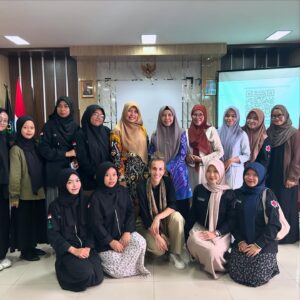
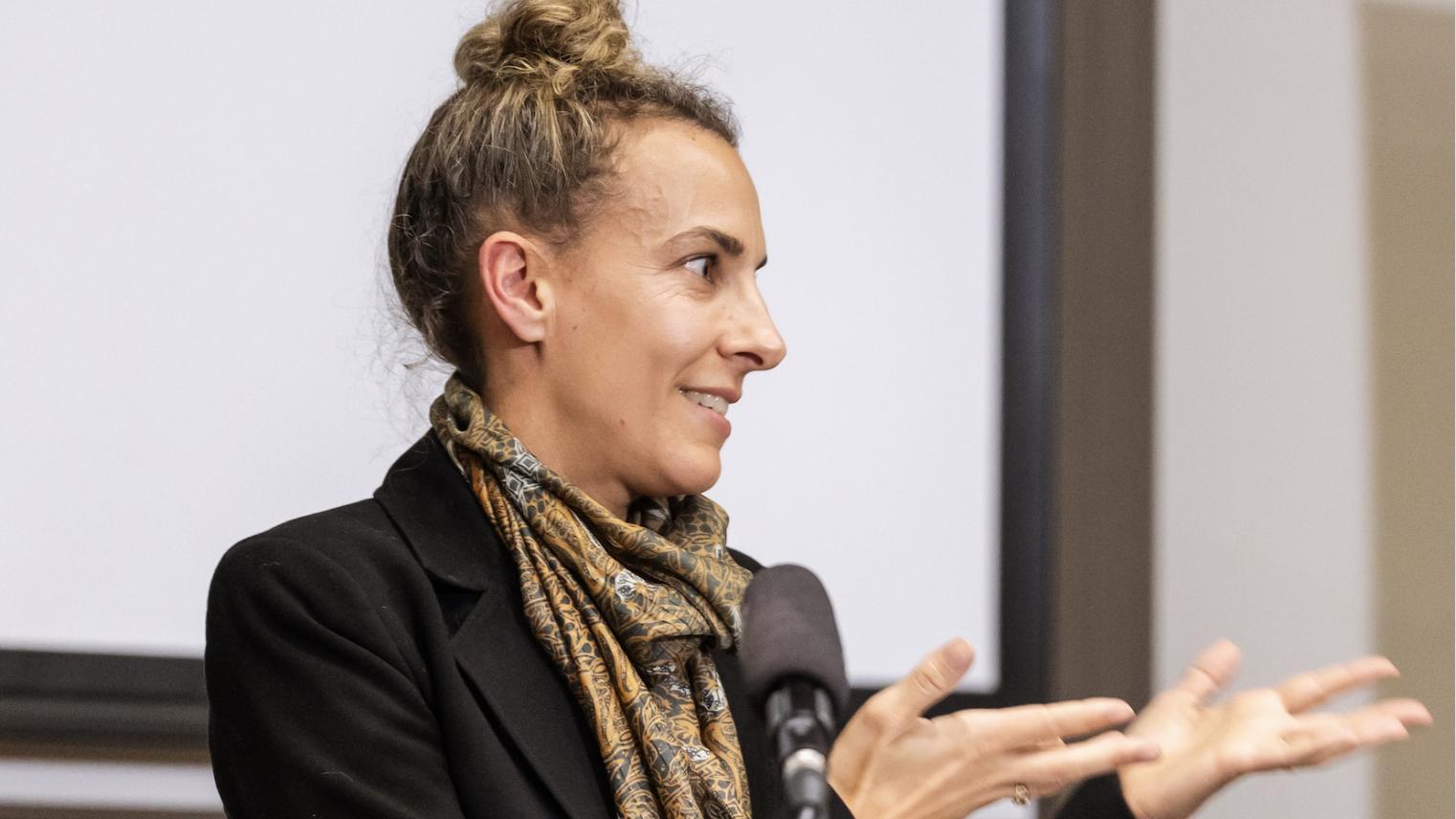
Eve teaching a class at Hasanuddin University, Makassar, 2025.
That complexity came from all directions: communicating in a new language, navigating unfamiliar food and schedules, building new friendships across cultural boundaries. Eve became particularly close with her ibu kos, the woman who owned and ran the boarding house, spending considerable time with her and her family.
“We had a wonderful experience learning to communicate with each other without using language often because we didn’t quite have the language, at least in those first few months,” Eve reflects. “All of that just made me a more patient person, someone who became much more comfortable with complexity.”
The friendships she formed during that semester have endured for over two decades, and some of her fellow Acicis participants remain best friends today. “All I wanted to do was go back once I came to Australia,” she says. “I just was constantly thinking about trying to plot ways to go back to Yogyakarta and to go back to my kos.”
After completing her undergraduate degree, Eve pursued a master’s degree in human rights at Columbia University before deciding that what she really wanted was the autonomy and intellectual freedom of academic research. “I realised that I thoroughly enjoyed that process of designing from the very first step, executing, concluding, analysing, writing,” she explains. “The whole thing. The autonomy of being able to run a project myself.”
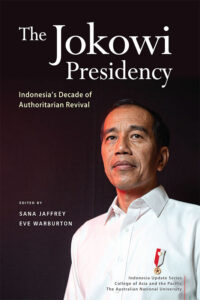 Eve’s 2025 book, The Jokowi Presidency. | 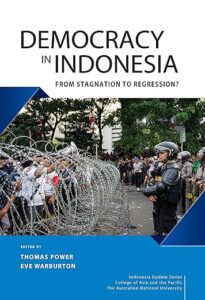 Eve’s 2020 book, Democracy in Indonesia: From Stagnation to Regression? |
That realisation led to a PhD at ANU focusing on the politics and political economy of economic nationalism in Indonesia, particularly in natural resource sectors. She subsequently held postdoctoral positions at the National University of Singapore and ISEAS-Yusof Ishak Institute before returning to ANU, where she now leads research on business politicians and democratic representation in Indonesia.
“The people that I met through Acicis continue to shape the career choices I made, the life choices I made for years to come, and some of them are still very much front and centre of my both personal and professional life today.”
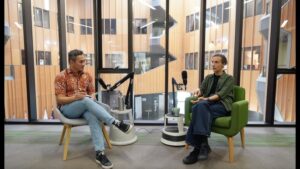
Eve on the Southeast Asia from the Ground Up – Researching the Region podcast, 2024.
Eve is particularly passionate about encouraging semester-long programs, noting that extended immersion is crucial for developing meaningful language skills and deep cultural understanding. “It’s so important for people to have that option because that’s really the only way that you get your language to a point where you’re having these sophisticated, meaningful deep conversations with people from all different walks of life.”
Looking back on her time as a Acicis student more than twenty years ago, Eve sees the program’s value. “To have that kind of experience at a younger age and for that to have these ripple effects that you continue to feel throughout the rest of your life, not many people have that.”