

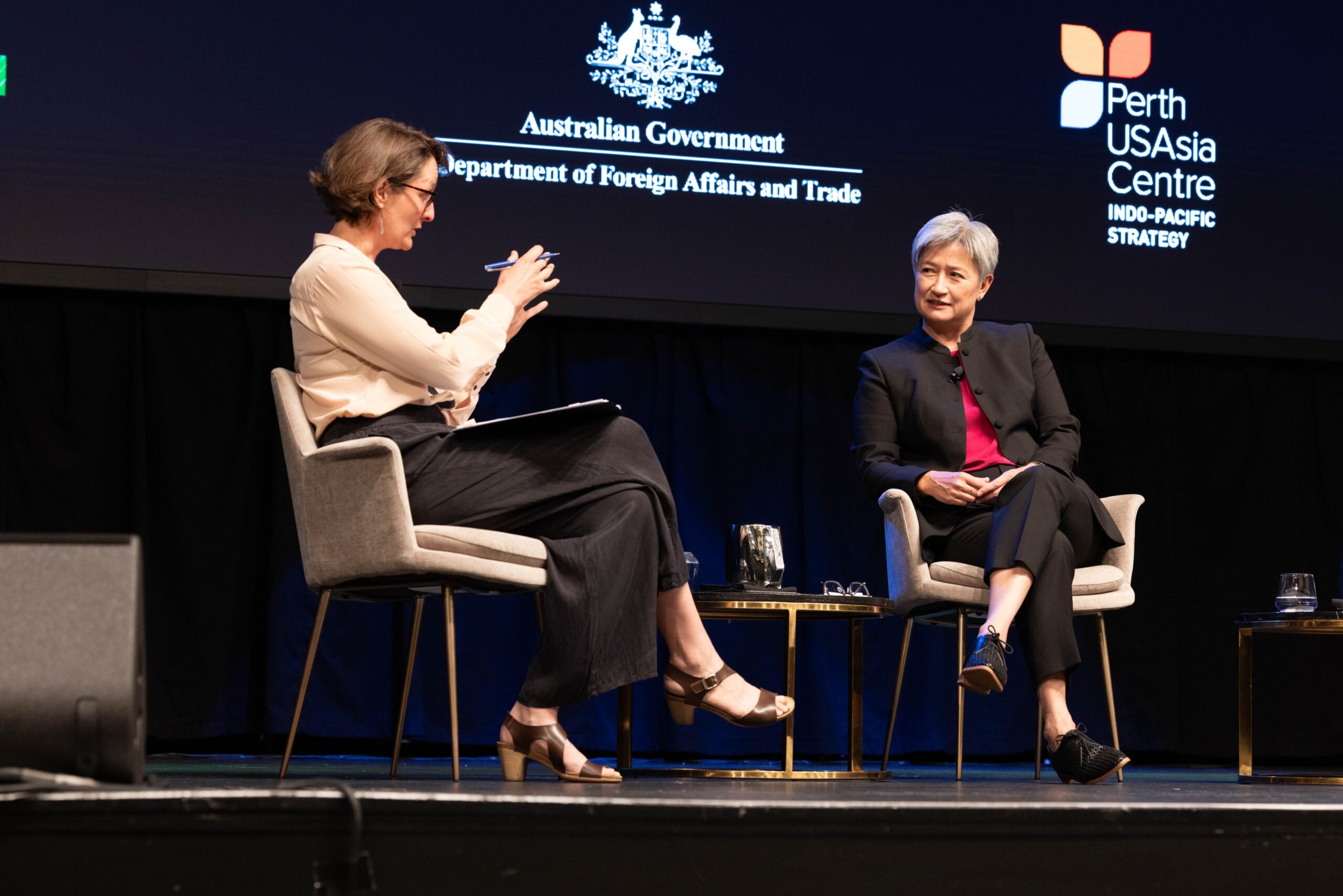
Dr Kate O’Shaughnessy completed the Flexible Language Immersion Program in 2000. Kate is now the Western Australia state manager for the Australian Submarine Agency.
More than two decades after her Acicis semester in Yogyakarta, Kate can trace clear lines between that experience and her career as a diplomat, researcher and policy leader. Recently finishing her role as Research Director at the Perth USAsia Centre, Kate led the Centre’s research programs across the Indo-Pacific. With ambassadorships, high commissioner roles and senior policy work behind her, Kate has become a recognised authority on the Indo-Pacific. Her public engagements have included high profile conversations with figures such as Foreign Minister Penny Wong. Yet the journey that brought her into this world started in a remarkably unplanned fashion.
“There’s two opposite answers to that,” she laughed, when asked what motivated her to enrol in Acicis back in 2000. “One is it was random. I grew up in a country town, Kalgoorlie. I moved to Perth and just enrolled in a Bachelor of Arts with no thought about what units I might take. And there was a girl in my residential college that had enrolled in Bahasa Indonesia, so I enrolled as well.”
Kate studied Indonesian for a couple of years but left university unsure where it might lead. She pursued honours in history, worked at the Western Australian Museum and kept returning to an underlying desire to learn a language more deeply. When she heard about the Acicis program, she realised it was a chance to commit properly. “I thought, well, I want to a learn language. This program helps you learn more. I’ve studied a couple of years. Why don’t I do it? So I just signed up and went in 2000.”
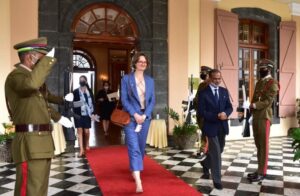 Kate in her role as High Commissioner to Mauritius and Seychelles, 2020. | 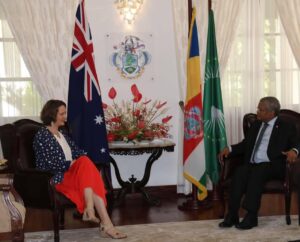 Kate with President Ramkalawan of Seychelles, 2021. |
That decision proved influential. “The personal growth piece was massive,” Kate said. Living in Java expanded her adaptability, confidence and cross cultural fluency, all skills that would later become central to her success in foreign policy. “It gave me a personal resilience, a sense of achievement of something difficult in a very different environment. That set me up in a way that I don’t think anything else would have done for a diplomatic career.”
Her time in Indonesia also reignited her academic curiosity. “I had thought initially that I wanted to be an academic… and I actually wanted to know more about this place and study it more deeply.” That realisation pushed her to return to university to complete a PhD in Indonesian history at the University of Western Australia. Her research on gender during the Suharto era was later published as Gender, State and Social Power in Contemporary Indonesia in Routledge’s Women in Asia Series. Through this, she discovered a talent for operating in cross cultural environments and a curiosity about diplomacy.
Kate joined the Department of Foreign Affairs and Trade in 2007, beginning a sixteen-year diplomatic career that included postings in Ghana and deployments to Lebanon, France and Nigeria. She later served as Australia’s High Commissioner to Mauritius and Seychelles and Ambassador to Madagascar and Comoros, advocating for Australia’s interests across the western Indian Ocean. In Canberra, she worked across intelligence analysis, policy development, and the Australian aid budget. That range of work, she said, was made possible in part by what Acicis had instilled: a receptiveness to difference.
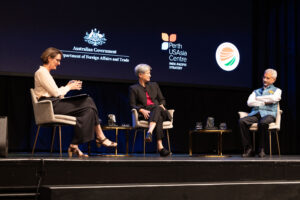 Kate with Senator the Hon. Penny Wong, Australian Minister for Foreign Affairs, and Indian Minister for External Affairs, Dr S Jaishankar, 2024. | 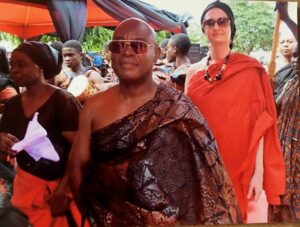 Kate working as diplomat in Ghana, 2011. |
“Every time I went into a wildly different environment where I didn’t know how things worked… I would come back to that early experience,” she said. Even though she didn’t return to Indonesia in a posting, the imprint of her semester there stayed with her. “I do feel really strongly that that time in Indonesia shaped my career quite profoundly and it shaped my ability to do it well.”
Another unexpected legacy of Acicis was the strength of the friendships she formed. “It opened up connections to a cohort of interested and interesting and globally engaged Australians,” she said. “You don’t think about that when you’re 18 or 25… but it’s actually nice to realise, I’ve got this network that is excellent, and we could collaborate and do things that are good for the nation together.”
Today, Kate brings to her work her academic background in Indonesian history and her wide-ranging experience, from UN Security Council analysis to Indian Ocean diplomacy. Yet she still returns to the lessons she learnt in Yogyakarta more than twenty years ago.
“It will be an Asian century,” she said, reflecting on what she would tell a young person considering studying in Indonesia. “This choice that you make now about whether you take Indonesian or Hindi or Korean will be absolutely pivotal to what the future of Australia looks like. It’s an individual choice, but it’s also a national interest choice. It’s really important that we all get engaged.”


