

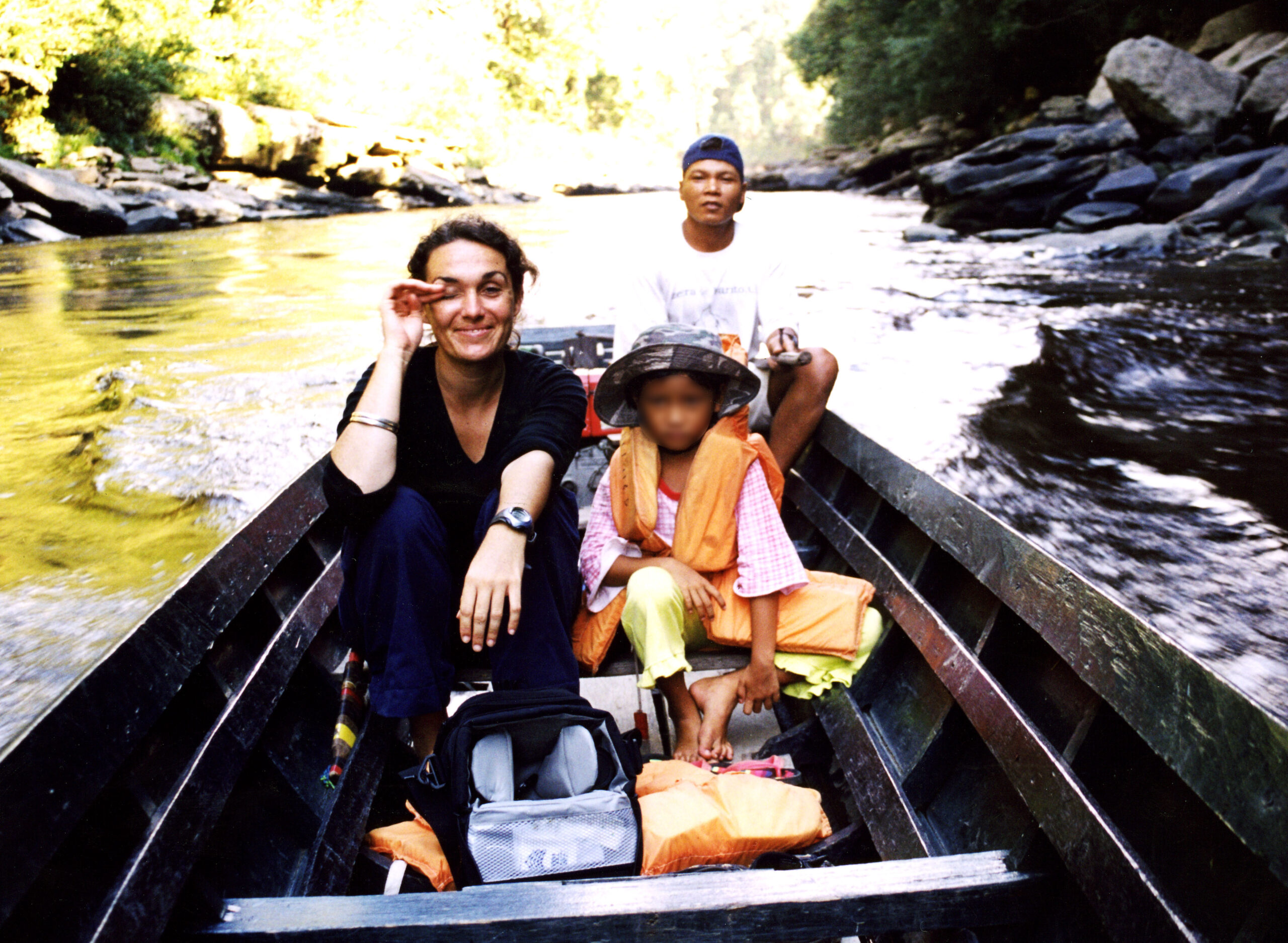
Dr Sunny Sanderson completed the Flexible Language Immersion Program in 1999, while studying at the University of Queensland.
Today, Sunny Sanderson works with the Menzies School of Health Research on an Australian Centre for International Agricultural Research (ACIAR) and Department of Foreign Affairs and Trade (DFAT) funded project examining zoonotic malaria in regions of Indonesia and neighbouring areas that are experiencing rapid agricultural land use change. Her work focuses on assessing how shifts in farming practices, plantation expansion and forest clearing affect malaria transmission from monkeys to humans. She explains that the project brings together specialists across disciplines and uses a One Health approach to consider environmental health, human health and wildlife health.
After twenty-five years working in Indonesia and Malaysia, the role draws directly on her long experience in remote communities, her language skills and her ability to work respectfully with local partners.
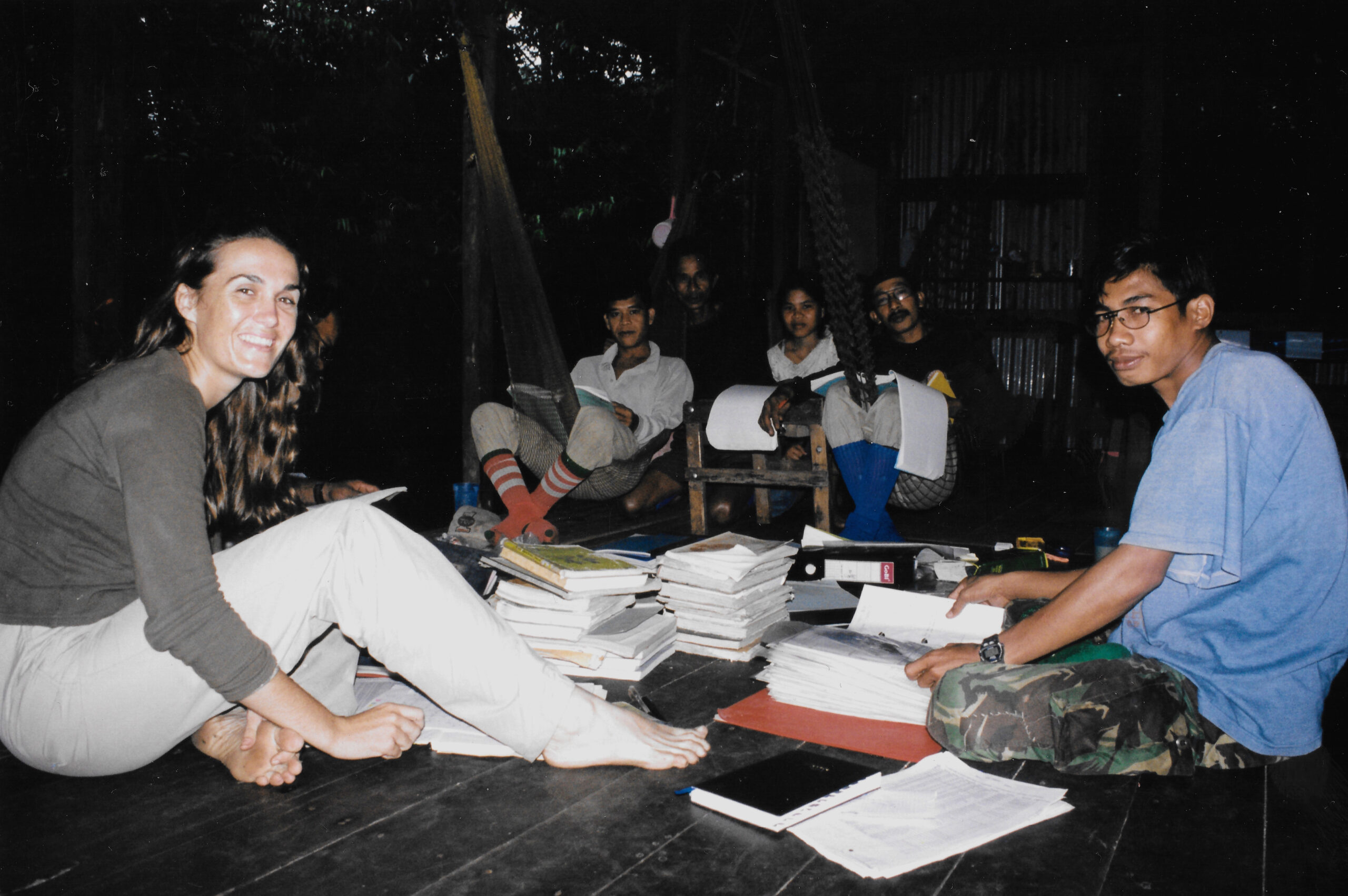 Sunny collating orangutan feeding data in Gunung Palung, West Kalimantan. |  Sunny planting rice with a family she stayed with during her PhD fieldwork in Sarawak. |
Her approach to this work is shaped by decades in the field, from collecting gibbon songs in the geographic centre of Borneo to interviewing families navigating land pressures and labour migration. Sunny’s beginnings with Indonesia can be traced back to Acicis.
Sunny joined Acicis after a neighbour urged her to reconsider studying Chinese, telling her, “there are 200 million people just to the north of here. I think you should think about that”. Already fascinated by Indonesia through old exploration books, she arrived in Yogyakarta during Indonesia’s first democratic election. Wanting full immersion, she chose to live in a kos because “we’re here to immerse, let’s do this”.
Her semester was full of unexpected commitments and deep community experiences. She volunteered with a local NGO in a village behind Borobudur. On her first night she unintentionally agreed to teach English to “all the villages in that hill range” after trying to be polite during a long late night conversation she barely understood . She also volunteered at Gembira Loka Zoo in exchange for language lessons. The experience “really cemented the importance of understanding people and giving space to understand people and listen to people”.
A defining influence was then Acicis Resident Director Associate Professor David Reeve. “He really encouraged me to view things in a different way, to realise it shouldn’t be a push push, rush rush thing. You are in a different culture, so enjoy it, let it wash over you and move with it”. That advice shaped her approach to research partnerships that followed.
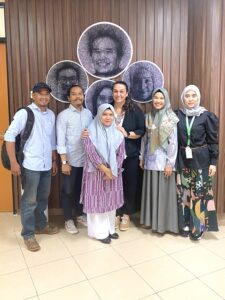
Sunny with the zoonotic malaria social science team, Medan, Sumatra.
Instead of returning home after Acicis, Sunny travelled to Sabah to work with an orangutan research station. From there she moved into long term research roles across Borneo. Of one journey she remembers, “it took about six days to get up there around lots of Rapids” as she travelled to collect gibbon song recordings in remote headwaters.
Across these roles, her Acicis foundation remained central. “The program really gave a grounding approach to not buy into that whole bapak bapak, ibu ibu thing of Orang Penting. Everybody is important. Everybody deserves equal respect. Everybody should be listened to”. She draws on that daily in her current work, particularly when living in villages, conducting surveys and working closely with communities.
When asked what advice she would give outgoing students, Sunny offers two points. First, “really embrace it. Still trust your gut about whether you are safe, but embrace what you can because it is going to pass and before you know it, it will be over”. Second, be mindful and open. “Let go of your own preconceptions of how things should be, because you are in a different country”.


