
Vikram Chunilal was a participant of the Law Professional Practicum (LPP), in 2024. Vikram is studying at The Australian National University.
Q: Why did you decide to undertake the Acicis internship program?
As part of my Law and Arts Degree I study an Indonesian Language major and the opportunity to study both aspects of my degree in Indonesia through the Law Professional Practicum was really appealing. Being able to practice speaking Bahasa Indonesia in Indonesia and apply skills learnt at university in a practical way also drew me to undertake the Acicis internship program.
Q: Did you receive a New Colombo Plan Mobility Grant? Do you think the NCP is an important initiative? If yes, why?
I was lucky enough to receive the New Colombo Plan Mobility Grant and I think this is important for students to receive as I think it increases accessibility for this program though making it more affordable especially given this course is not supported through HECS.
Q: Where did you live in Indonesia (Kos, homestay, hotel, rental etc.)? Any tips for prospective students on finding accommodation?
I stayed in the loji @ Setiabudi arranged through Airbnb and I recommend this for any future students undertaking the program. My tips for accomodation would be after you have received your placement location to look on Airbnb and other travel websites for accommodation nearby but hold of booking until you get to Indonesia as you may find other places or live with other students in an apartment.
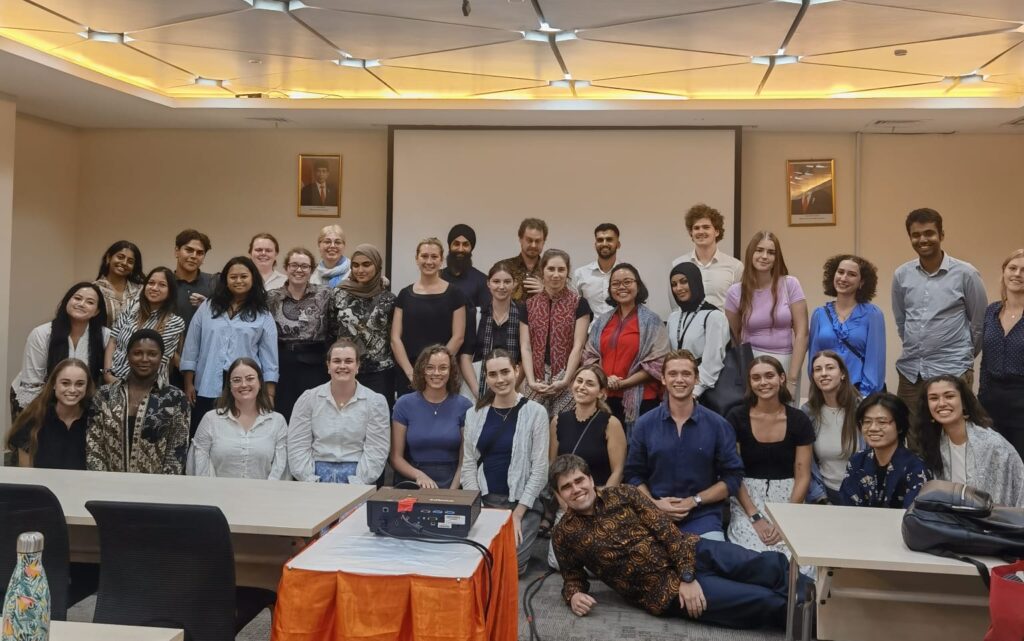
Q: How have you found the academic components of this program – i.e. the language classes/seminars?
I found the seminars for the Law Professional Practicum really interesting and insightful and we studied topics from online gender based violence to the basics of the Indonesian legal system. It was also quite interesting having the program run in the lead up to the Indonesian election and learn about how the election outcome may affect future legal issues. As I study Indonesian in my Arts degree I found the language classes (intermediate level) really useful as I was able to revise and consolidate a years worth of content in 2 weeks and they were of course allot of fun as well.
Q: What organisation are you interning with? (Explain your role and responsibilities)
I interned with Bagus Enrico and Partners a corporate law firm in Jakarta and my internship was focused on comparative law. Each Thursday the ACICIS interns had a Q&A session with the Indonesian interns and senior associates at the firm presenting different aspects of Australian law such as Data Protection and Dispute Resolution with research conducted throughout the previous week.
Q: How have you found the work culture of your host organisation? How is it different to work experience in Australia?
I found the work culture in Indonesia to be much more sociable and connected than in Australia and I think this is something that is reflected not only in the workplace but in Jakarta as a whole.
Q: What are the main skills you have learnt during your internship?
Having not worked in corporate law before this internship was really valuable as I practiced contract drafting and legal research for cases.
Q: What did you find to be the most rewarding part of this experience?
The most rewarding part of the program was the people that I met. Not only the other Acicis Australian students but also students from Indonesia as well as staff within my placement. I also found shopping for Batik a highlight of the trip as it throws you in the chaos of Indonesia and Indonesian markets while bonding with friends.
Q: Were you able to learn about the Indonesian culture from this program? If yes, how was this achieved?
Through language classes and seminars I learnt about Indonesian culture but even more so from staff and interns within my host organisation who gave me recommendations for food, tourist attractions and stories about Indonesia. Even locals are willing to talk to you about Indonesia and if you are open to learning about Indoensian culture you will learn so much.
Q: How will the internship benefit or influence your future career?
Given that Indonesia will become one of the world’s largest economies in the near future, there will be more integration with Indonesia which will translate into the legal sector. I would like to work with firms that focus on Asia Pacific in the corporate sphere such as King Wood and Mallesons and Herbert Smith Freehills and I think that this experience of living and working in Indonesia and creating strong legal partnerships differentiates you from other students.
Q: Would you recommend this program to your friends?
I would definitely recommend this trip to anyone who is interested in Indonesia or wants to do a course overseas but not necessarily for a whole semester.
Q: Favourite Indonesian word/phrase:
Bule which is kind of a slang term for foreigner in Indonesia which some of us on the trip were called or called each other.
Q: What did you get up to in your free-time? i.e. in the evenings and on weekends.
Over the course of the program my friends and I found activities and places we would frequent such as bouldering gyms and malls. We also managed to get to Bali for a weekend as well as Yogyakarta. In the evenings we would explore different spots for dinner and were lucky to find the Chillax Sudirman food complex close to accomodation which I highly recommend.
Q: What surprised you about Indonesia? Any new insights?
I was surprised by how busy it was. We were told that there was a lot of traffic and hustle and bustle but I don’t think you realise what it is like until you actually land in Jakarta. I was also surprised by the prices compared to Australia and how cheap it was to live for 6 weeks.